COMPATIBILIZERS
APPLICATIONS
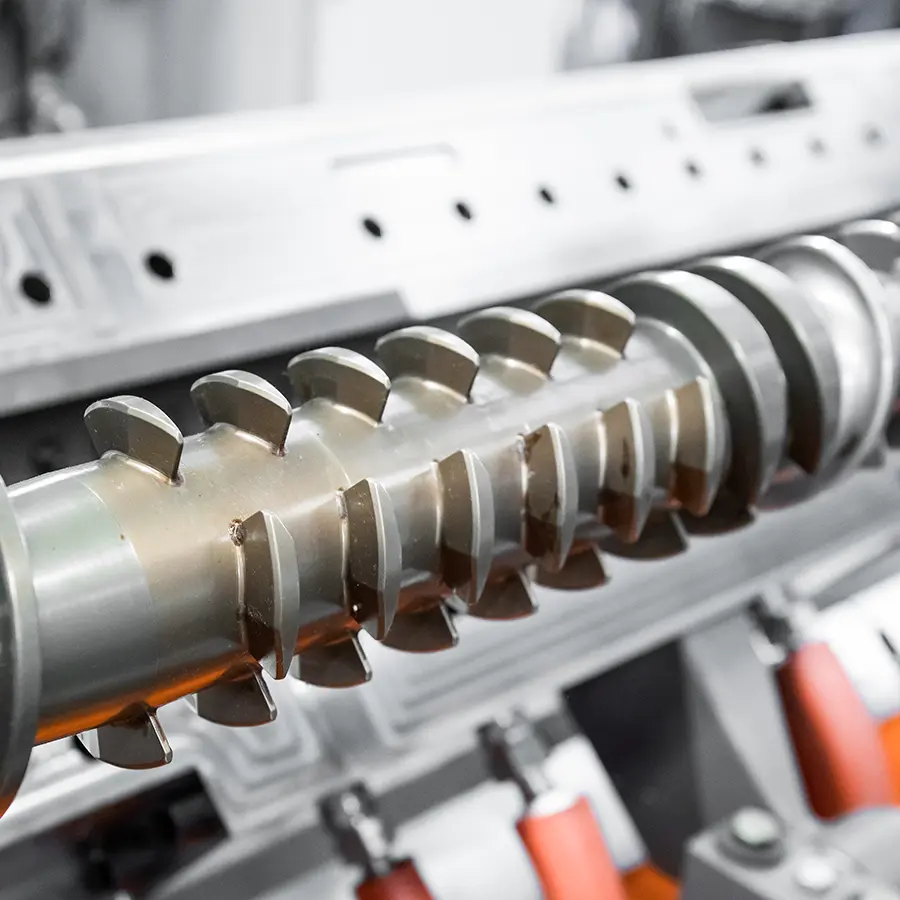
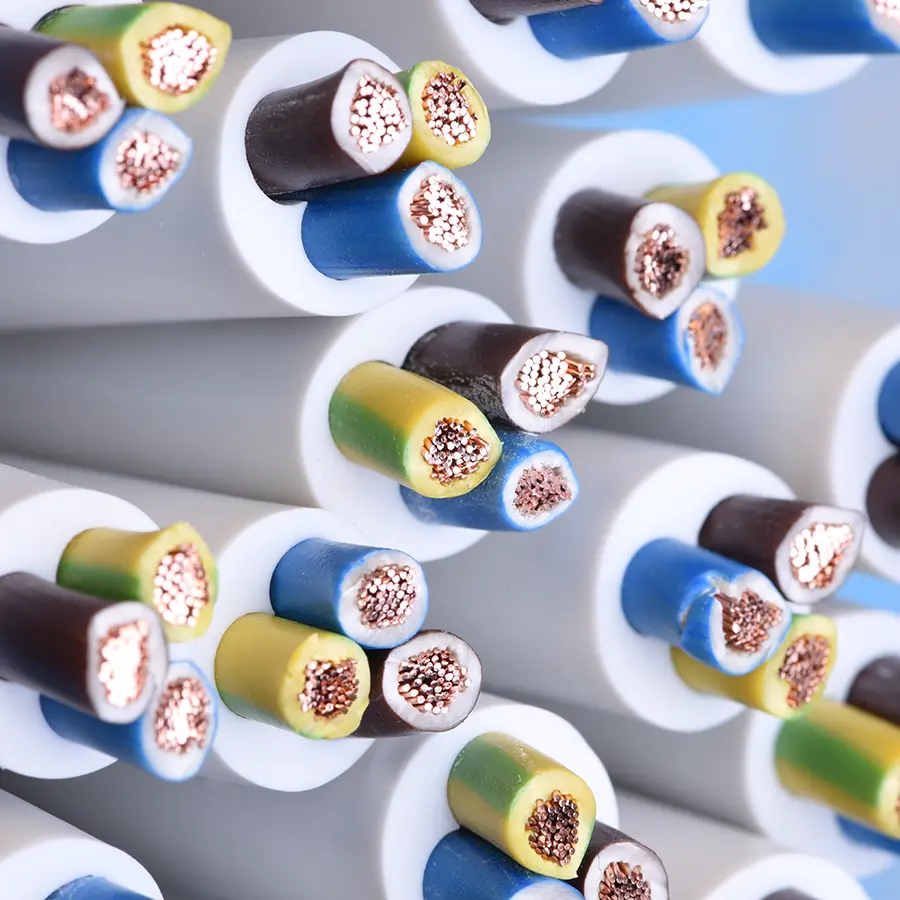
Our PE- and PP-based compatibilizers and coupling agents are engineered to optimize the homogenization of the compound in which they are used, maximizing the chemical interaction between the polymer matrix and the other substances present.
This helps optimize formula costs as well as the chemical, physical, and mechanical properties of the final product.
HFFR
Halogen-free flame retardants
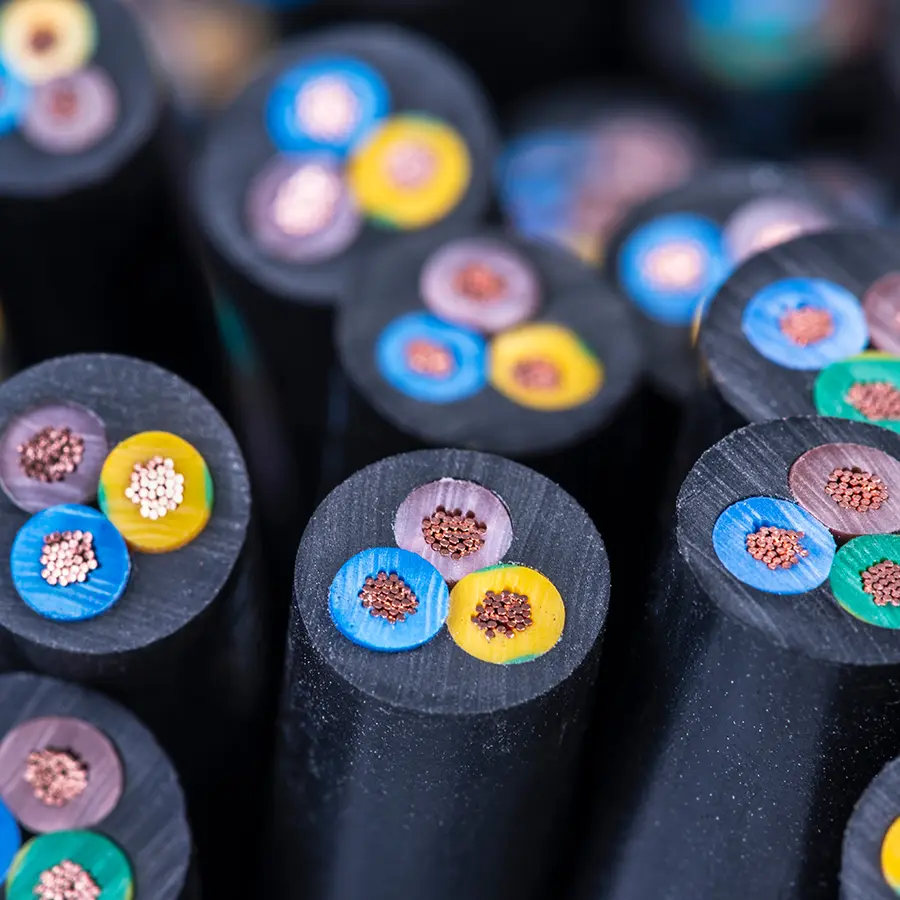
Compounds used for insulation and sheathing of electrical cables must have flame-retardant properties.
To achieve this characteristic, over 50% of compound manufacturers use:
- ATH (Aluminum Trihydroxide), Al-(OH)₃
- MDH (Magnesium Hydroxide), Mg-(OH)₂
These mineral fillers are used in flame-retardant compounds in significant amounts, up to around 65% of the total polymer mixture. The use of coupling agents is necessary to chemically bind the hydroxides to the polymer matrix (PE or EVA), as well as to improve particle dispersion and micronization within the matrix.
Depending on the polymer structures used and the properties to be preserved or enhanced in the final product (tensile strength, elongation at break, etc.), MPB has developed different types of coupling agents.
Polyolefin Compounds
from Recycled Multilayer Films with EVOH and/or PA
In recent years, the market has increasingly demanded solutions that meet new consumer needs, and terms such as “circular economy” and “green economy” have become a mantra for all industry professionals.
Recycling multilayer polyolefin films containing EVOH and/or PA has become an essential requirement, and nearly all recent regulations are moving in this direction, such as the PPWR – Regulation (EU) 2025/40.
Whereas until recently, recycling barrier films was an operation typically carried out by specialized companies (mainly post-consumer), today even multilayer film producers have equipped themselves to reuse their own industrial scraps. These scraps are reintroduced into the production cycle and blended with virgin polymers in increasingly higher percentages.
With compatibilizers dedicated to this function, MPB supports its Clients—whether film producers or recyclers—in successfully embracing these new market trends.


GRPP
Glass Fiber Reinforced PP
Primarily for the automotive sector, but also for various injection-molded products in general, PP compounds are reinforced with glass fiber to enhance their mechanical properties.
For this purpose, the use of coupling agents is necessary. Their role is to chemically bond a nonpolar polymer such as PP with a polar inorganic material like glass fiber.
Using coupling agents in PP compounds improves all the main mechanical properties, including tensile strength and impact resistance.
MPB is able to supply several dedicated grades for this sector, depending on the melt flow index required by the specific application.
WPC
Wood-Plastic Composites
For the production of various items, especially in the nautical sector and for outdoor furniture and garden applications, polyolefin compounds are reinforced with wood fiber. This serves an aesthetic function, reduces required maintenance, and also allows for recycling wood fibers from other production chains, promoting the reuse of certain manufacturing waste.
For this purpose, the use of coupling agents is necessary. They chemically bond a nonpolar polymer such as PP with a polar material like wood fiber and optimize the processability of the compound.
The use of coupling agents in polyolefin compounds improves all the main mechanical properties, including tensile strength and impact resistance.
MPB can supply several dedicated grades for this sector, depending on the melt flow index required by the Customers.